
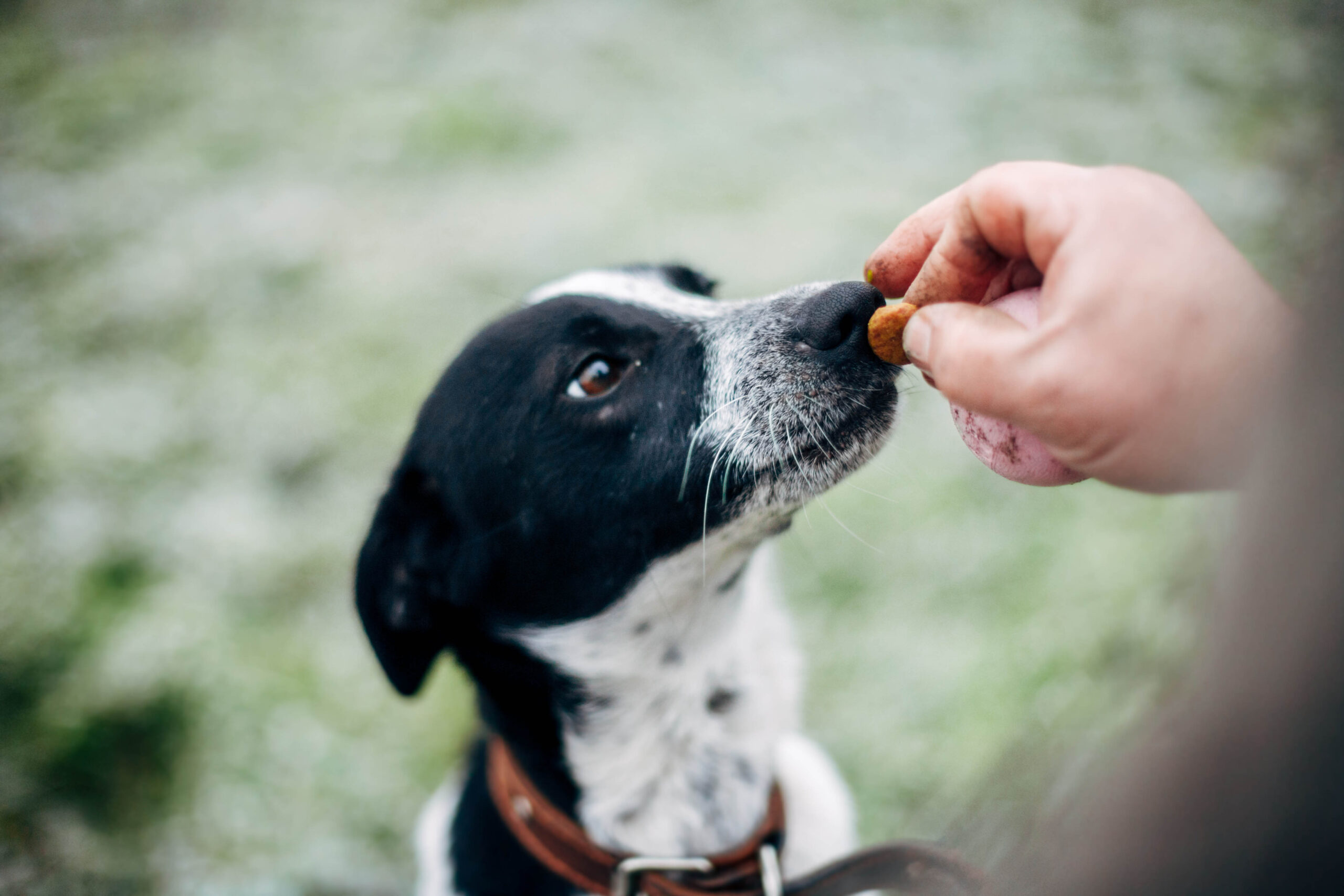
For most dogs, food is a great and easy way to reinforce good behavior (whether we’re using their kibble or rotisserie chicken depends on the context!). We use it heavily here at School for Dogs and coach most of our clients to do the same in the learning process. So you might ask: What’s the number one argument you hear against using treats in training?
The Number One Concern About Treats
“My dog won’t listen unless they see a treat!”
Whether it’s come, sit, or leave it, these behaviors can fall apart quickly if you don’t have the skills to wean your pup off of their treats. This can be really frustrating for the humans when that happens!
At the end of the day, a finished dog shouldn’t need treats for their known behaviors. If they are still reliant on treats, then they need more training. My adult finished dogs go out regularly without treats and maintain all of their skills. Although, I might shove one or two in a pocket because there might be an unpredictable emergency where they need extra help.
Why Dogs Become Treat-Dependent
When using treats in training, the easiest pitfall is not knowing how to stop using them. You will end up with a dog that has to see treats in order to comply with cues. Giving a treat for every behavior (be it sit, down, leave it, etc) is what we call “continuous reinforcement”. This is the best way to start teaching a behavior because it’s really powerful and clear to the learner. But if you drop down from continuous to no reinforcement then it will very quickly fall apart due to extinction.
Think about it this way: If I gave you ten dollars every time you touched your nose, you’d start touching your nose a lot! But if I suddenly stop, you’d likely try a few times, get frustrated that I wasn’t paying you anymore and quit. Our dogs aren’t that much different than we are when it comes to learning.
Now that we’ve discussed why it happens, let’s talk about the actual process of fading out the treats so you can get to the finished dog. There are a lot of ways to work on it so we’ll go through a few.
Change Your Reinforcement Schedule
First off, think about varying your reinforcement schedule a little. Make it less predictable when exactly they’re going to get a treat so they throw themselves into every skill.
Imagine that instead of completely stopping giving you ten dollars when you touch your nose, I give you $10 occasionally when you do it, but at a rate that you can’t predict. Once you establish the behavior with continuous reinforcement ($10 every time), I switch to variable reinforcement. This means I don’t pay you the first time you do it BUT I pay you the second time you do it. Then the next time, the fourth time, the second time, etc and keep it unpredictable.
You’re likely going to start doing it more because you want to get to the one that’s going to earn the reinforcer. If it was too predictable you’d do it a set number of times and then stop and wait for the payment. But by keeping it unpredictable for the learner, they do it with the same enthusiasm every time.
Apply that same concept to your dog training. You can do it with a single behavior (IE mix the amount of times you ask for sit before reinforcing). Or what works best in my experience is mixing up behaviors and paying randomly (sit, down, treat. Leave it, come, sit, treat. Sit treat. etc) The dog is then doing multiple things to get a treat, but can’t predict which behavior is going to be the one that rewards them.
This idea of a variable reinforcement schedule is the secret to having the finished dog. It sets the behaviors up for the lowest risk for extinction.
Get Treats Off Your Body
Another way to work on weaning down on treats is to simply start by getting them off of your body. If, like me and many of our clients, you walk around with a pocketful of food or a treat bag attached to you, our dogs recognize that the presence of the treats means they’re “training” and they pop into attention.
The first step is easy, put the treats on the counter next to you and ask for a behavior. When they do it, get a treat off the counter and reinforce them for it. Then step a little bit away from the treats and do it again. Mark (verbally or with a clicker) when they do the behavior and then go get a treat and give it to them. Do this in different spaces in your house and then move the game outside. Just be careful to sit treats where they can’t get to them!
Over time and repetition they’ll start to understand that a reinforcer is coming, even if it delays by a bit of distance.
Combine Both Methods
I would do these two methods individually at first until they’re fluent and then start combining them. So at the end of it you should be able to walk away from your treats, get multiple behaviors from your dog, and then pay them with a reinforcer/treat without losing any enthusiasm in the process.
Other Reinforcers Beyond Food
Another thing to keep in mind, especially once a behavior is fully learned and clean in multiple environments: treats aren’t the only reinforcer in our toolbox! Many dogs reinforce by praise, touch, toys, even releasing them to sniff a smelly bit of grass. As you go through the training process we start to discuss how to mix up your reinforcers so that they aren’t always looking for the presence of food. I highly recommend 100% reinforcement rate for coming when called for the life of the dog, but that doesn’t mean you’re going to have to have food every single time for the rest of their lives. A verbal “good dog”, snuggles (if the dog likes snuggles), throwing a toy or initiating a game of tug, all can be valuable reinforcers to our dogs.
Second biggest complaint about using treats for training? “But I want my dog to want to do it because I said so.” But we’ll get into that another day!
Learn more about our full list of training services and upcoming classes HERE!